

I'm a boy mom
Teaching myself how to raise boys.

P.S. Most of this post was written in November and December, before my second son was born. You’ll see me reference being pregnant, but our newest little boy arrived in late December. 🤎 We’re so excited he’s here!
I’ve been reading a book called Boy Mom. My friend Amara recommended it when I was pregnant with my first son, but I never got around to opening it up. Now, eight months pregnant with my second son, I finally started it. The book explores the joys and challenges of raising boys, examining how the ways masculinity is taught and performed, and how that shapes who they become.
The author, a fellow “boy mom,” puts words to feelings I’ve been holding quietly within since I learned my first child would be a boy1. I hadn’t imagined parenthood often, but when I did, I always pictured a daughter. I’m close with my sister, my mom, and my girlfriends, and I want that same kind of intimate connection with my own kid.
The idea of raising a boy felt foreign, terrifying even. And I mourned the loss of sharing womanhood with a daughter and wondered how—or if—I could build the same closeness with a son.
Plus, when I shared the news that we were having a boy, the reactions I received only deepened my uncertainty. My in-laws were genuinely thrilled, but so many others gave me a pitying half-smile and said things like “get ready for chaos,” “prepare for years of smelly clothes,” and “oh gosh, you’re going to be outnumbered by boys now.” They said it kindly, but their tone carried an undercurrent of dread, as if I’d just been handed the short straw.
Historically, of course, this type of reaction hasn’t been the case. For much of human history and in many parts of the world, boys are still the preferred sex. Sons carried on the family name, inherited property, and symbolized security. But now, in the U.S. and other Western countries, the trend has shifted. Many people quietly (or openly) hope for girls, a reversal that researchers attribute to changing gender roles and the perception that daughters grow up to maintain closer emotional ties and provide more care to their parents later in life.
This is exactly what I was worried about. My gender disappointment stemmed from the belief that I would build closer emotional ties with a daughter. With sons, this picture feels fuzzier. When my sons turn 25, I have no idea what our relationships will look like. What I want is the emotional closeness, ease, and support I share with my mom, but is that even possible between mother and son? I have limited experience seeing those kinds of relationships up close. Maybe they exist? Or maybe they don’t.
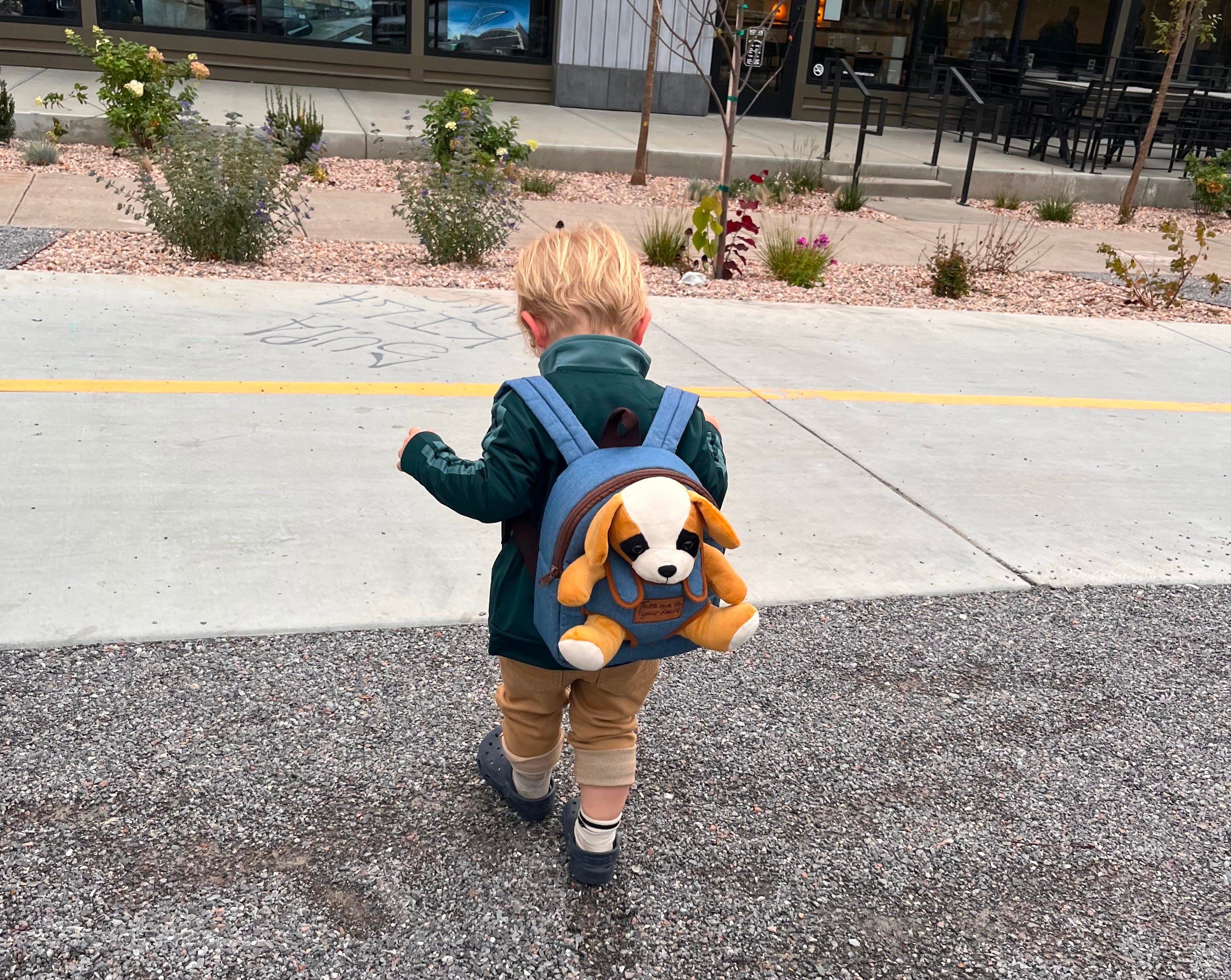
I think that’s why, in the early days2, I tried to nudge things a little, to make sure Lukas wouldn’t be a ‘truck kid’ obsessed with boy things. But despite my attempts, he loves everything that moves: trucks, trains, planes, cars. And that’s only the beginning.
He’s aggressive at times, endlessly in motion, obsessed with throwing, climbing, crashing, testing. He loves wrestling and falling. I know that much of this describes girls, too, but for lack of a better way of saying it… my eldest boy is such a boy3.
These characteristics aren’t intrinsically bad. Beneath the chaos is a deep sense of adventure, curiosity, and courage. These are qualities I want to foster.
It’s not about labeling or limiting behavior, but about noticing the different ways energy and curiosity show up.
I’m learning that my job is to embrace the things my son leans towards and widen what it means to “be a man.” The problem isn’t these typical boy behaviors themselves, but how they get twisted: strength becomes stoicism, confidence becomes dominance, playfulness becomes unruliness.
I have a partner who models what we want it to mean to “be a man.” My sons will see firsthand that a man can be both nurturing and strong, confident and compassionate, disciplined and playful. Watching their Dad navigate these dualities will give our sons living examples of how masculinity doesn’t have to be the narrow or rigid way it’s often portrayed. And it’s up to both my partner and me to show them that men can have powerful emotional connections with each other.
But we can’t just rely on showing this at home. Society needs to make these changes, too.
Schools, media, workplaces, and communities all play a role in shaping what boys see as possible. We need books, shows, and role models that normalize emotional expression, care, and vulnerability for boys. We need public narratives that celebrate tenderness in boys, not just toughness. Without these societal shifts, even the most intentional parenting risks being drowned out.
What I’m learning as I figure out how to be a mom is that I don’t need my sons to be less boy. But I do need to help them learn how to use those energetic, curious, physical, and sometimes chaotic traits as a starting place from which to expand and to soften. I need to help them channel that energy into productivity, that physicality into self-awareness, and that curiosity into empathy and connection.
I realized I needed to face my own gender disappointment and question if I was making assumptions.
Somewhere along the way, I had absorbed specific ideas about what raising boys would mean: that it would be loud, rough, and somehow less tender. And while it is loud and does seem to involve a lot of wrestling, it’s also incredibly tender. I feel it every night when my son and I cuddle and talk before bed.
Reading Boy Mom now, while pregnant with my second son, I find myself reflecting not just on what raising a boy has been like, but what it might be like to raise two. How will our routines, our patience, our energy stretch to accommodate a second whirlwind of energy and curiosity?
Watching my eldest and anticipating the arrival of his brother, my fears of connection feel unwarranted. The small moments—his hand in mine, shared laughter, singing in the car—remind me that our relationship and connection are something we get to create. Every day, I feel that deep bond as we grow, discovering new parts of ourselves together.
I didn’t feel the same gender disappointment when I found out I was pregnant with my second son. By that point, I already knew how wonderful and amazing it was to have a little boy.
Now, I lean into whatever he’s interested in! Including cars. :)
How do I know my second son will be as ‘boy’ as my first? I don’t. They’ll be different in all kinds of ways. But this little one kicks and rolls nonstop in-utero, just like his big brother did. And even though I just wrote an entire post about not making assumptions, here I am, assuming he’ll be just as full of energy.
I loved this! It’s such an honor to raise a little boy to grow up to be a strong and compassionate man! I’m still in the early years with my son but already there’s so much I’m learning on and thinking about 💗
Thank you for sharing. I am trying for a second and think I’m destined to be a boy mum. Gender disappointment is hard but I feel now I have a boy I know I can connect although he’s young and I’m worried about when he’s older. Congrats on your second